Case study · AI · Biosecurity
Biosecurity lifecycle monitoring with ML-driven anomaly detection
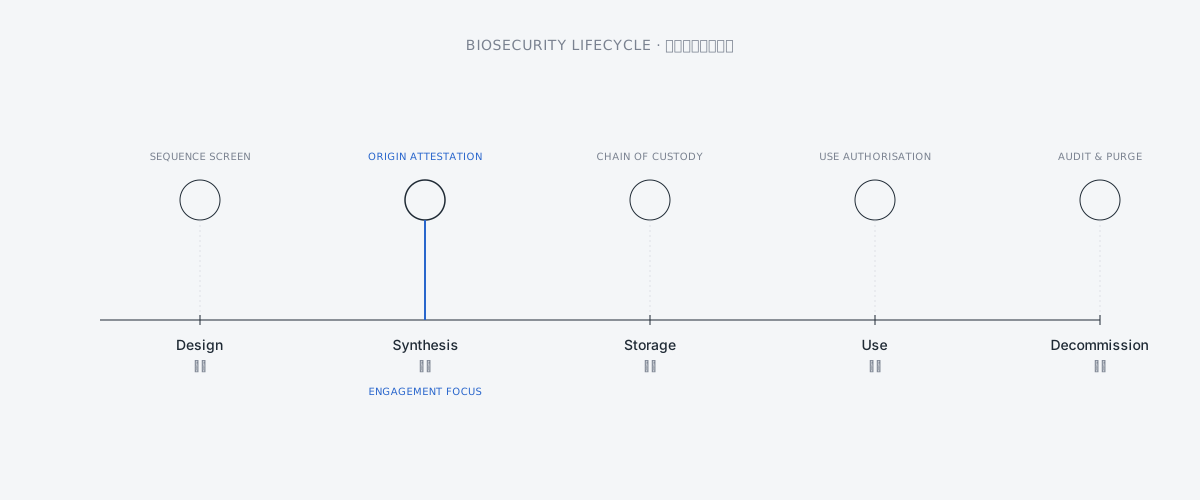
The brief
Sector: Biotechnology. Regulatory context: EU Dual-Use Regulation, Nagoya Protocol compliance. Need: an automated screening system to flag anomalous access patterns in a biological materials repository, with full audit trail for regulatory inspection.
Workstream decomposition
- WS-1: Access pattern modelling. Build a baseline model of normal access frequency, volume, and researcher profiles from two years of historical data.
- WS-2: Anomaly detection pipeline. Design and train an ML pipeline (isolation forest + LSTM sequence model) to flag deviations from baseline.
- WS-3: Provenance chain design. Architect the chain-of-custody data model to support regulatory audit from sample receipt to disposal.
Method highlight
The key challenge was false-positive management. Early versions of the isolation forest flagged 12% of legitimate accesses. We introduced a two-stage architecture: the isolation forest generates candidates, which are then scored by the LSTM model trained on confirmed-legitimate sequences. This reduced false positives to 1.8% while maintaining detection of all synthetically injected anomalies in testing.
Deliverable shape
- Trained ML pipeline with documented training data provenance
- Provenance chain data model with API specification
- Research dossier: 34 source rows
- Regulatory compliance mapping for EU Dual-Use export controls
Outcomes
The system was deployed in a staged rollout across three repository sites. Two genuine anomalies were detected in the first quarter of operation — both traced to administrative errors rather than security incidents, confirming the system's sensitivity without generating alarm fatigue.